
 العربية
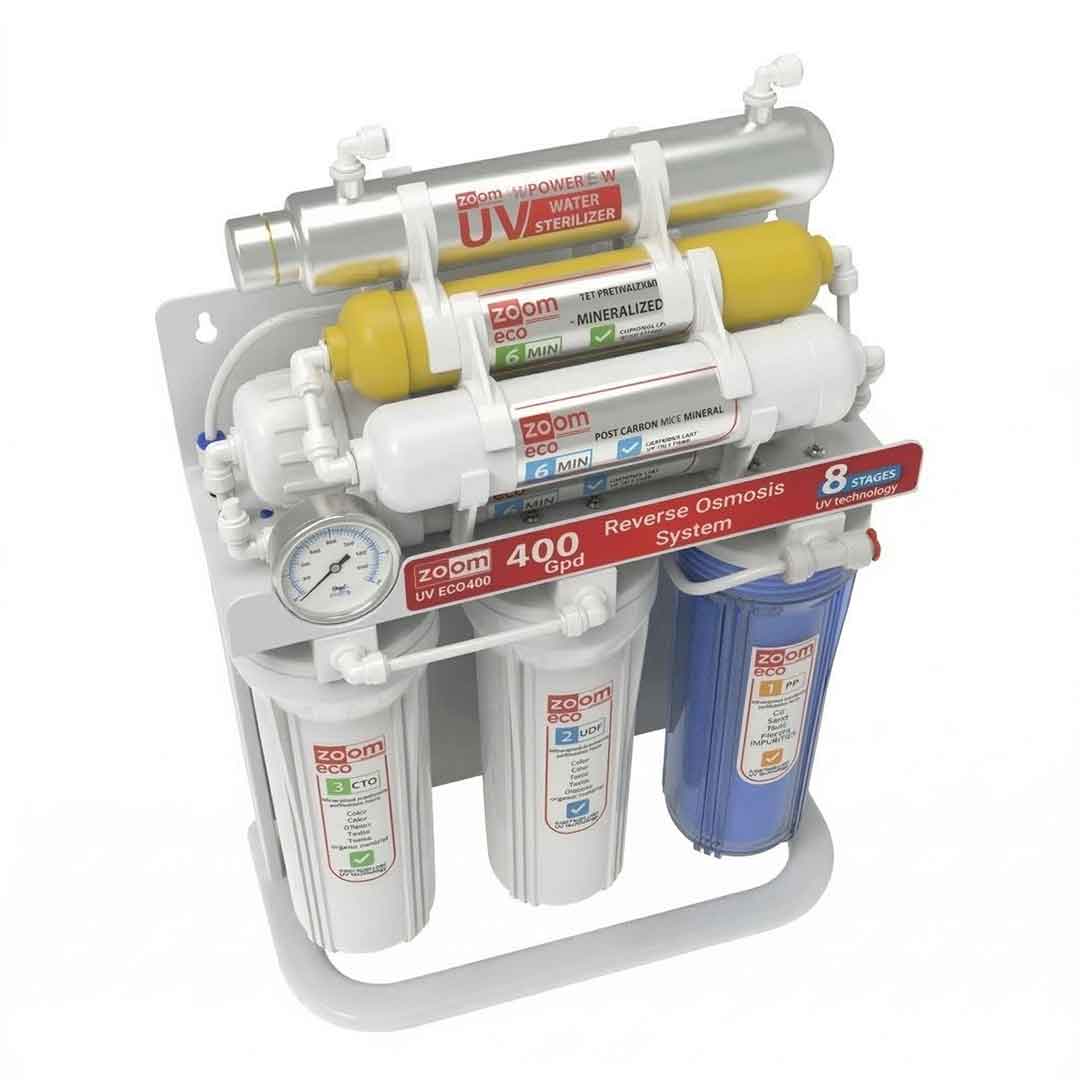
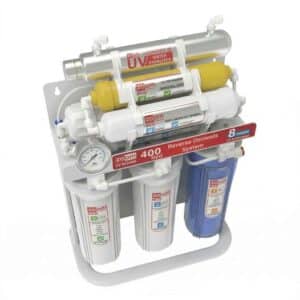
The Zoom Economic 8-Stage Water Filter – 400 GPD provides clean and safe drinking water without the need for a storage tank. It uses advanced Reverse Osmosis (RO) technology to remove sediments, chlorine, dissolved salts, and heavy metals, while additional stages improve taste and restore beneficial minerals. The 8th stage UV sterilization eliminates bacteria and viruses, making it an ideal solution for homes, restaurants, and cafés.
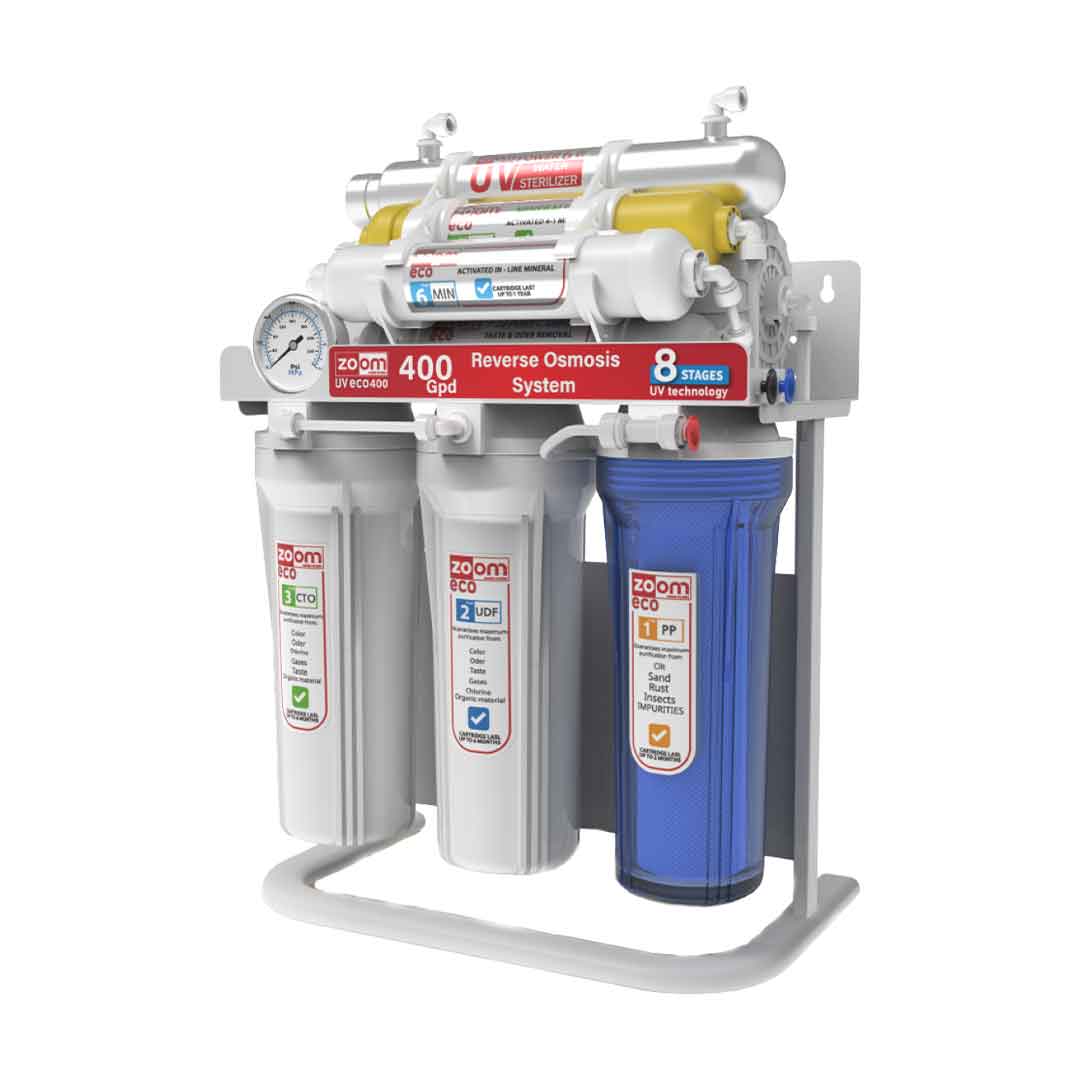
Zoom eco water filter 400 GPD WITH UV
78,0 ر.ع.
Zoom Economic 8-Stage Water Filter – 400 GPD Without Tank
The Zoom Economic 8-Stage Water Filter with a 400 GPD capacity is a reliable solution for clean and safe drinking water in homes, restaurants, and cafés. The system uses an advanced filtration process that combines Reverse Osmosis (RO) technology with multiple purification stages to remove sediments, chlorine, dissolved salts, heavy metals, and other contaminants.
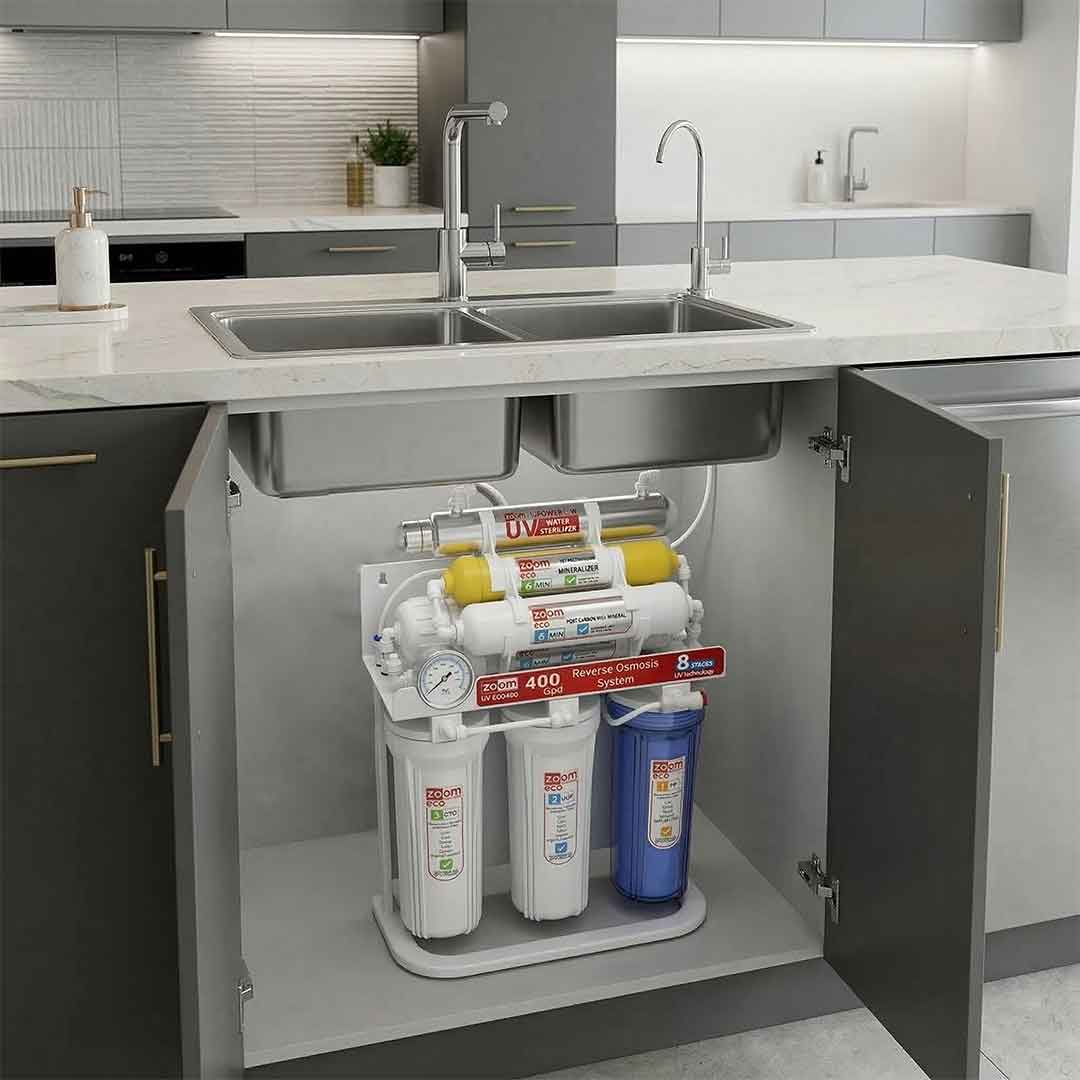
With a daily production capacity of up to 400 gallons, the system provides a continuous supply of purified water without the need for a storage tank, making it ideal for modern kitchens where space is limited.
The filter also includes a UV sterilization stage that helps eliminate bacteria, viruses, and microorganisms, ensuring safe and healthy drinking water.
Filtration Stages
Stage 1:
PP Sediment Filter that removes sand, rust, and large particles from water.
Stage 2:
Granular Activated Carbon (GAC) filter that absorbs chlorine, chemicals, and unpleasant odors.
Stage 3:
Carbon Block (CTO) filter that removes fine particles and organic contaminants before the RO stage.
Stage 4:
Reverse Osmosis (RO Membrane) that removes dissolved salts, heavy metals, and microscopic contaminants.
Stage 5:
Post Carbon filter that improves the taste and removes any remaining odor.
Stage 6:
Mineral Filter that restores beneficial minerals to the purified water.
Stage 7:
Alkaline Filter that helps balance the pH level of the water.
Stage 8:
UV Sterilization Stage that eliminates bacteria, viruses, and microorganisms to ensure safe drinking water.
Key Features
-
High production capacity of 400 gallons per day
-
Tankless system for continuous water flow
-
Advanced 8-stage filtration system
-
Removes salts, chlorine, and contaminants
-
UV sterilization for additional protection
-
Suitable for homes, restaurants, and cafés
-
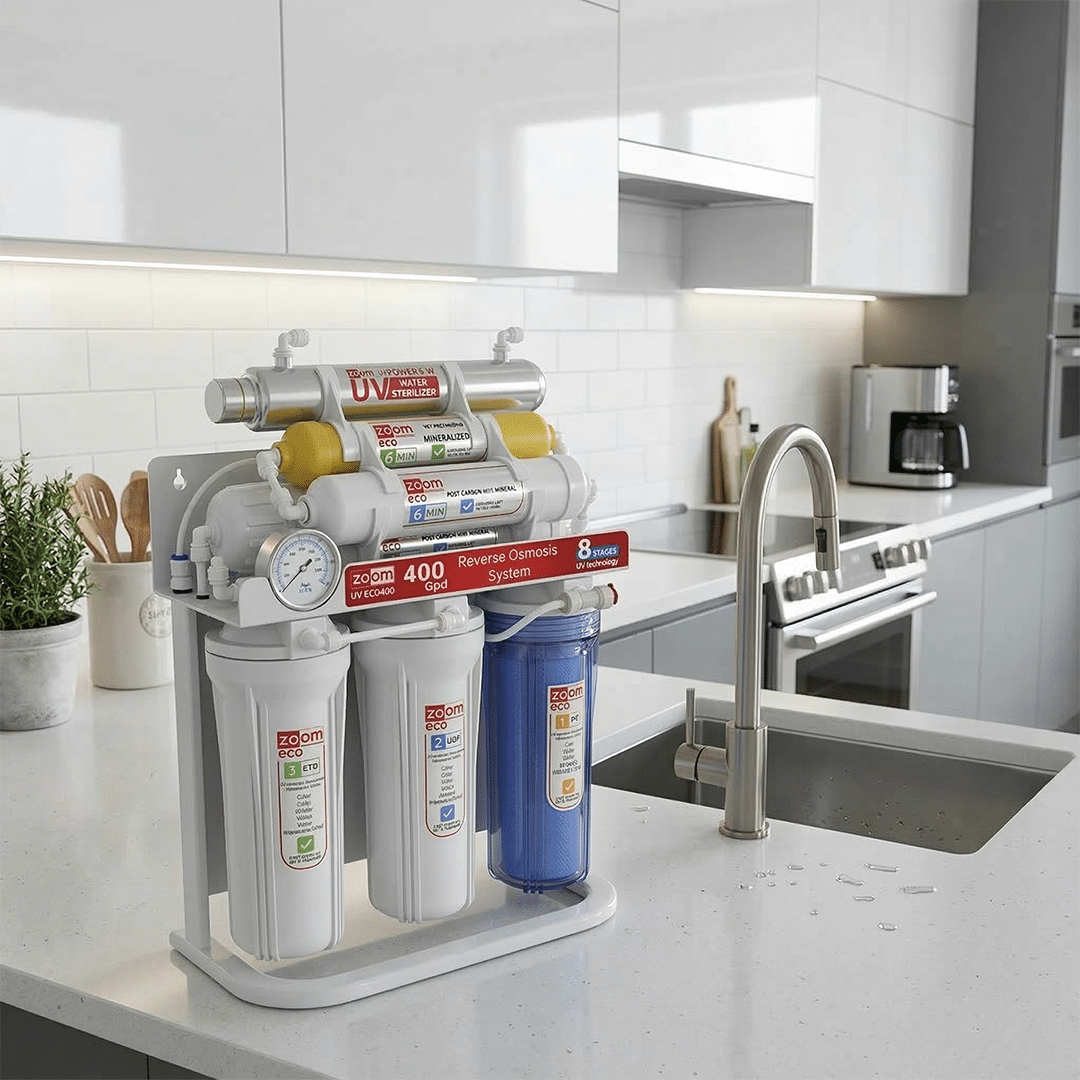
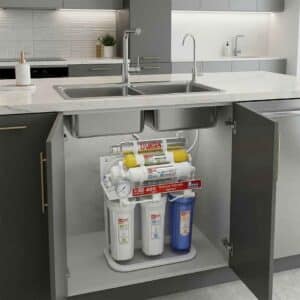
Compact design for easy installation in kitchens
Only logged in customers who have purchased this product may leave a review.
Related products
Out of stock



Out of stock


Reviews
There are no reviews yet.